Visual assets
| Purpose / reference | Editable source | Final render |
|---|---|---|
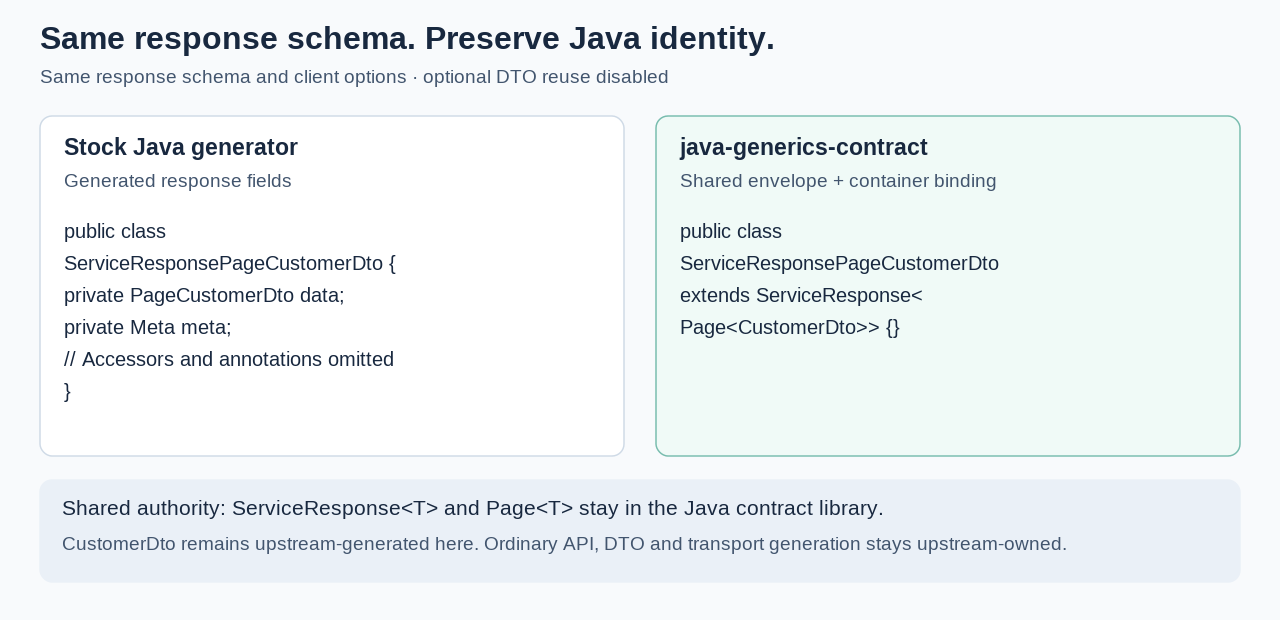
| README proof: stock generated model versus shared generic binding | proof/generic-binding-comparison.svg | Same SVG, displayed directly |
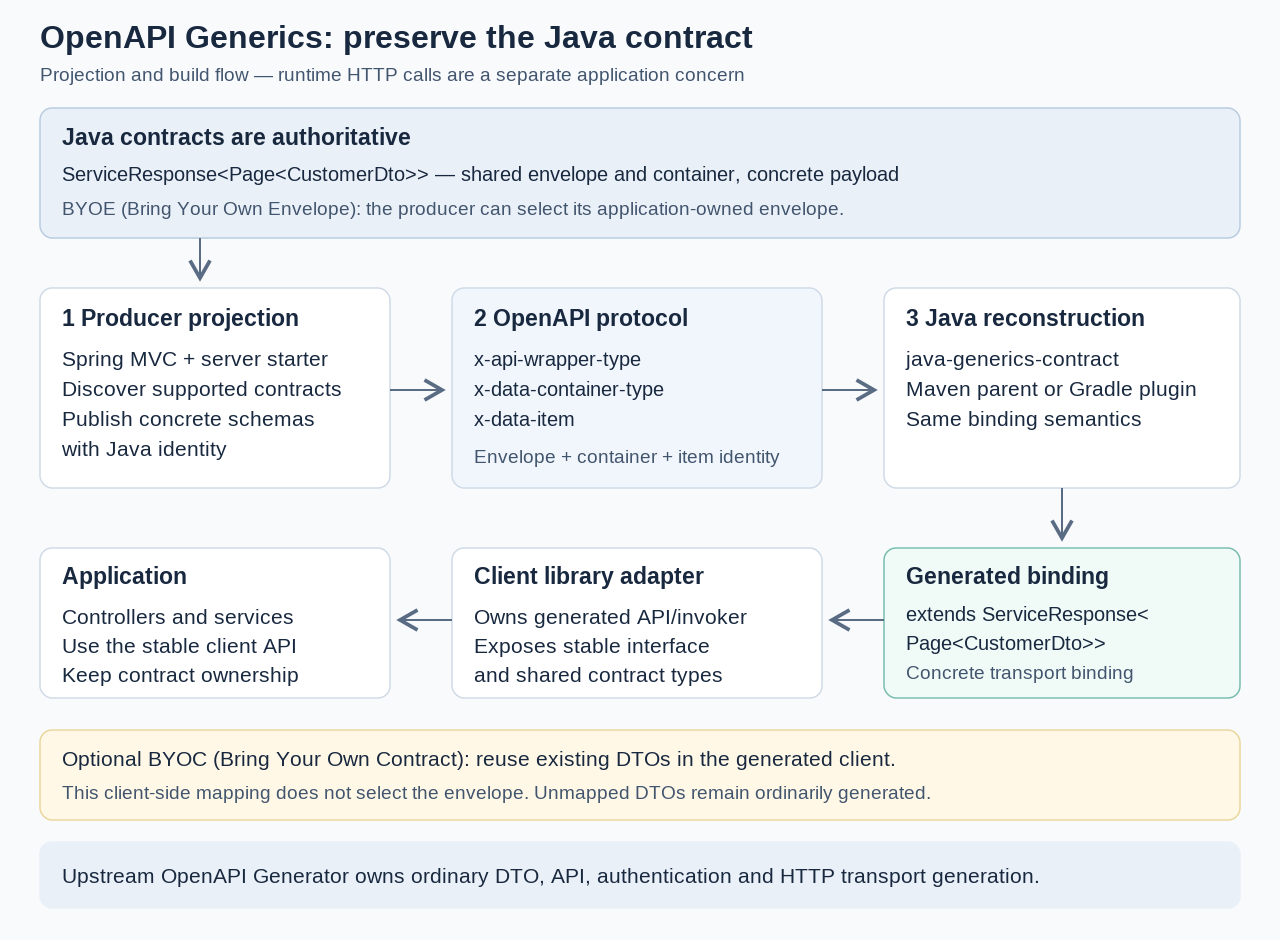
| Architecture: Java authority, projection/reconstruction and application boundaries | architecture/openapi-generics-architecture.svg | Same SVG, displayed directly |
| GitHub repository Social preview: product value at link-card size | social/social-preview.svg | social/social-preview.png, 1280×640 |
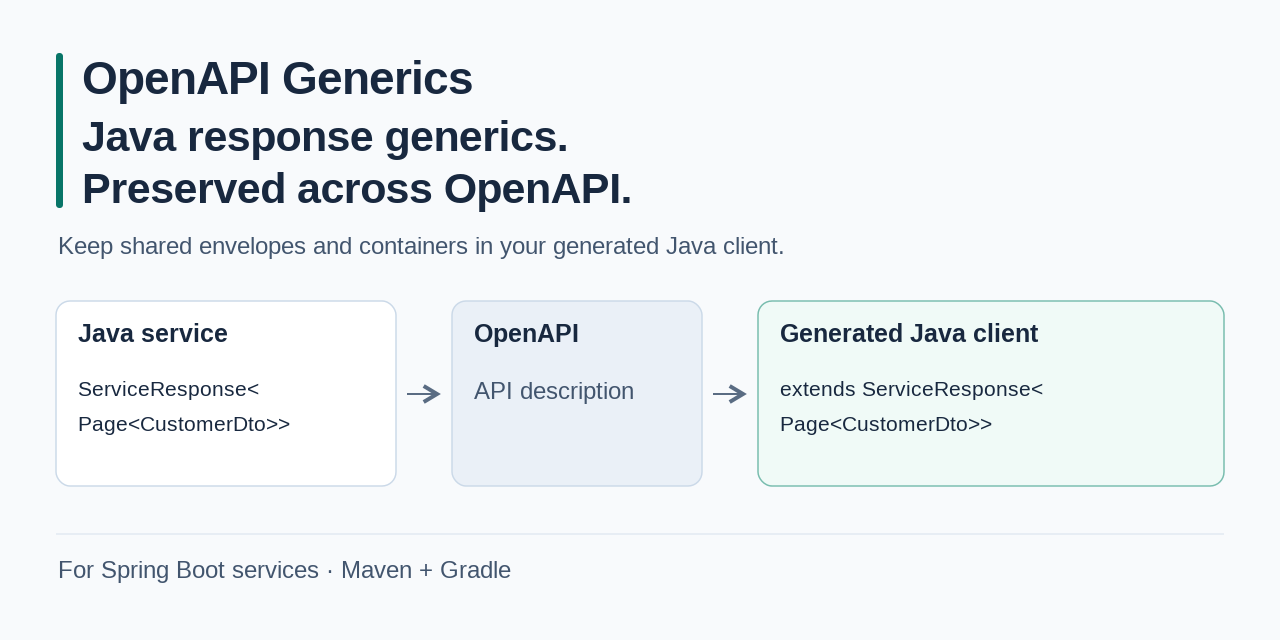
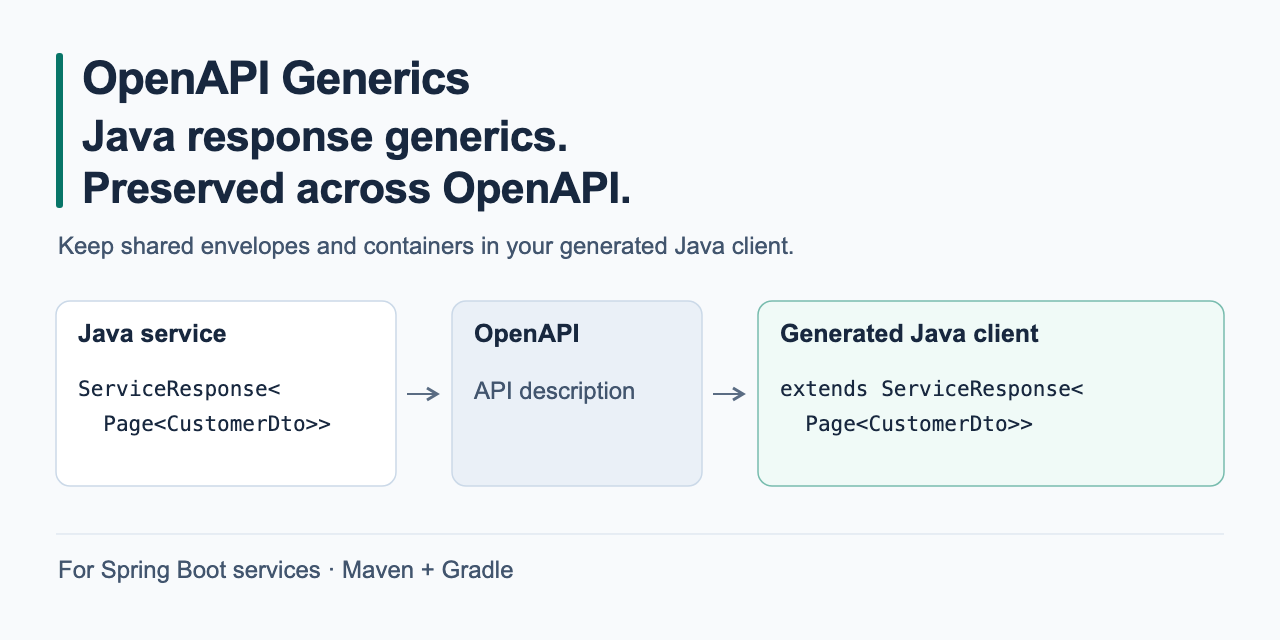
The maintainer manually uploads the social PNG to GitHub repository settings. Git does not update that setting. Keep the SVG and PNG together even though public Markdown does not embed the card. After editing the social SVG, export it in a browser at its declared size and check full/half-size readability.
Version lifecycle
Visuals contain no exact upstream versions. Social introduces the value; architecture explains ownership; proof shows concrete output. Supported/current/minimum/negative versions belong in the compatibility reference, not the artwork.
After an upstream reference promotion, rerun verification and update the record below if the output is unchanged. Do not edit SVGs or re-export PNGs merely for a patch release. Change artwork only when its message, architecture or verified code excerpt changes. All SVGs are directly editable sources; there is no separate HTML/draw.io source to synchronize.
Proof verification
Last verified: OpenAPI Generator 7.27.0, RestClient, Boot 4/Jackson 3, no external DTO mappings. Input: canonical customer snapshot. Options: useSpringBoot4=true, useJackson3=true, serializationLibrary=jackson, openApiNullable=false.
Use the standalone Gradle consumer example with that input. Generate and compile once with upstream java and once with java-generics-contract, keeping the same options and DTO reuse disabled. Stock java needs upstream source/task wiring; the platform registers sources only for its selected generator. Compare ServiceResponsePageCustomerDto.java: stock output owns PageCustomerDto data / Meta meta; the platform binding extends ServiceResponse<Page<CustomerDto>>. CustomerDto remains ordinarily generated in both outputs. The visual omits imports, annotations, accessors and other boilerplate; it is not a complete source listing.